
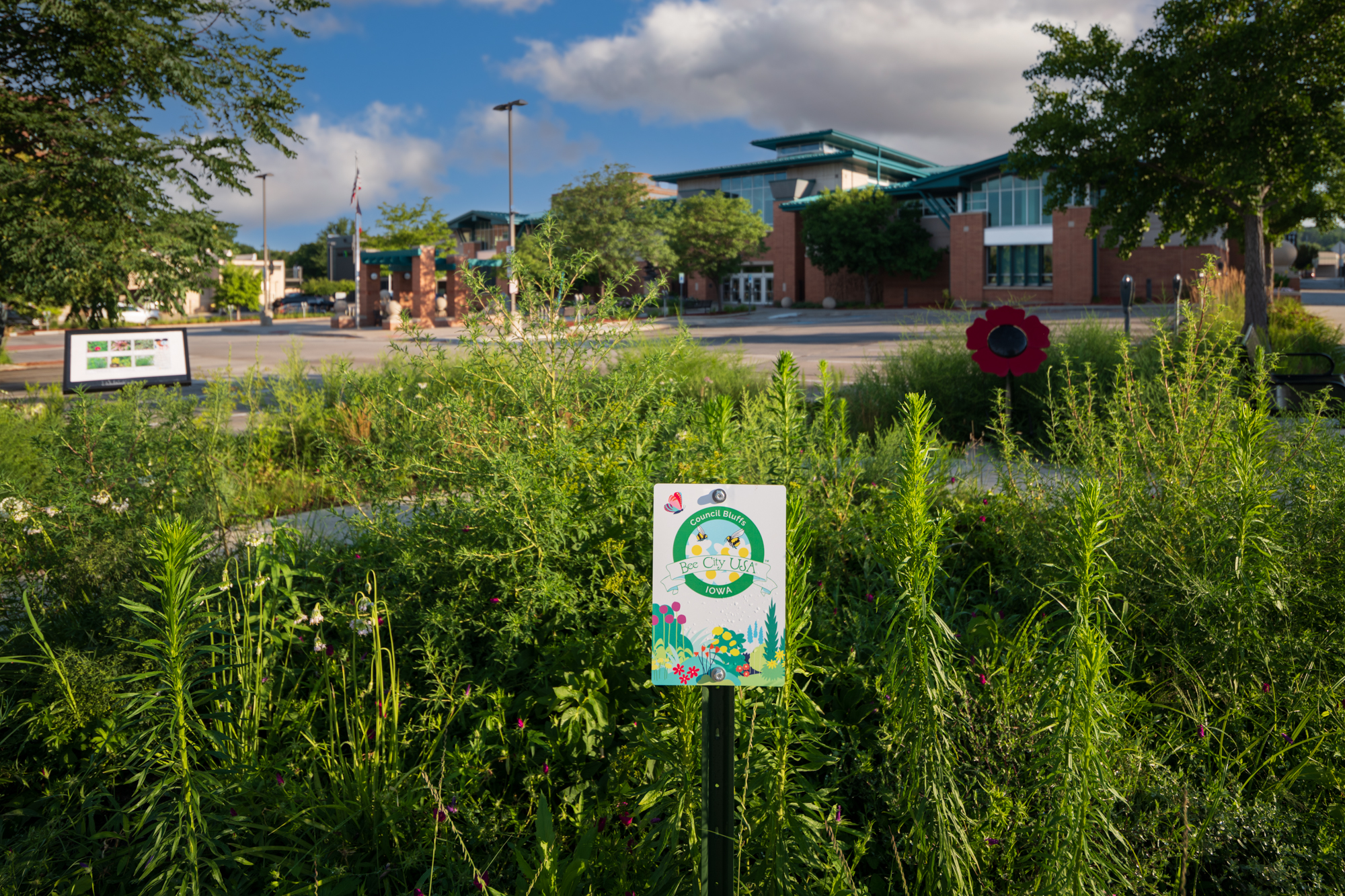
What is a micro prairie?
A micro prairie is a small, densely planted habitat using native grasses, sedges, and wildflowers, to support local pollinators and wildlife by recreating a miniature version of a larger prairie ecosystems. They provide crucial food and shelter for insects and birds, improve soil health, and help combat the decline of natural habitats.
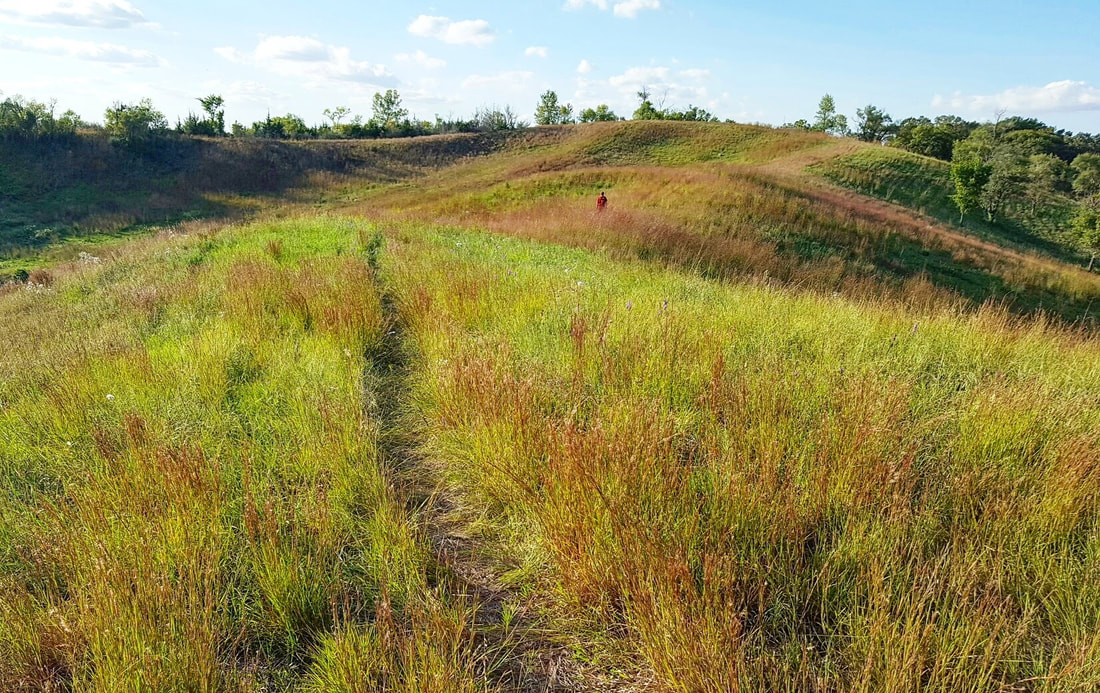
Iowa's Prairies
Iowa's prairies became established more than 10,000 years ago when the last glacial ice-sheets retreated.
Fire controlled most shallow-rooted plants as well as trees, but with roots that can reach depths of 16 feet, prairie plants were able to re-grow. Over thousands of years, the continuous cycle of life and death on the prairie built rich, black soil.
European immigrants soon learned that under Iowa's prairie lay some of the richest soil in the world. It took less than 70 years for 28.6 million acres of Iowa prairie to be converted to agriculture. Today less than 0.1% of the pre-settlement prairie remains.
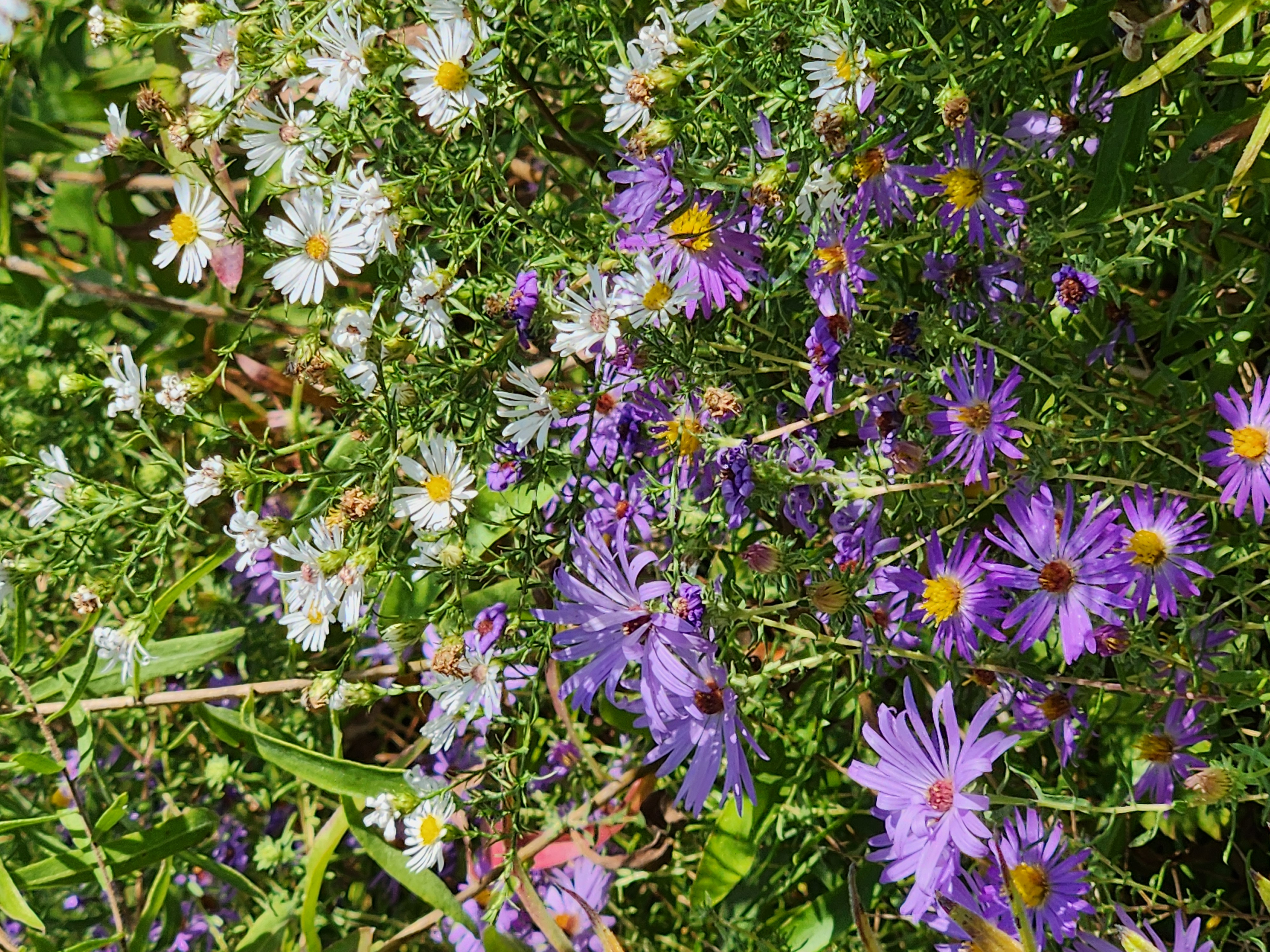
Native Plant Species List
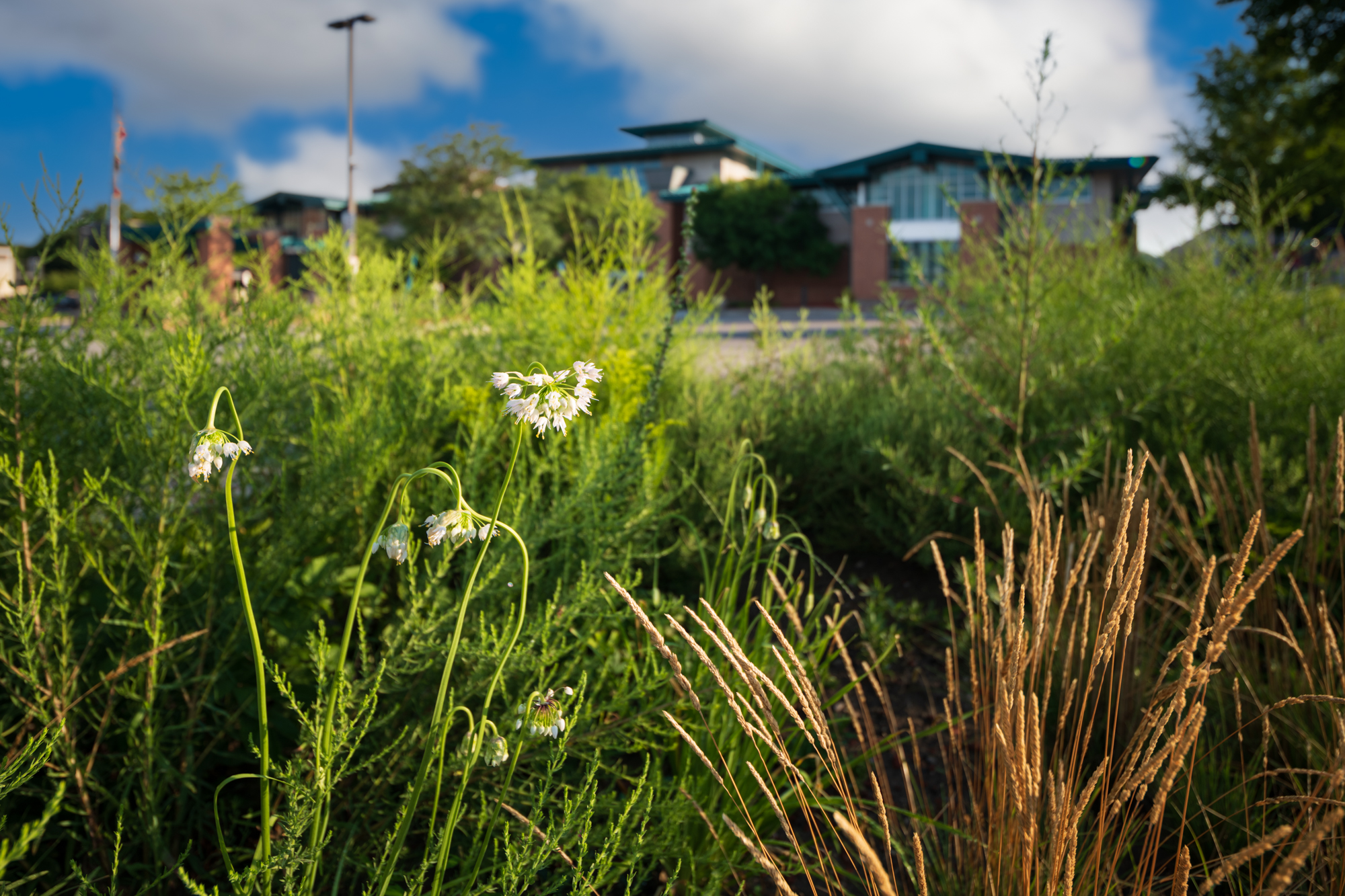
Library Micro Prairies
EVERY plant in our micro prairies has been carefully selected with the help of Pottawattamie County Conservation and has a job to do: larval host plant, food, shelter, or nesting site.
Small Scale, Big Impact
Support Pollinators
Micro prairies attract the pollinators who are vital for plant reproduction and food systems. The City of Council Bluffs has received a Bee City USA® designation in recognition of its commitment to improving landscapes for pollinators. Click on this link for tips and resources to start your own pollinator garden. Council Bluffs Bee City USA
Improve Soil Health
Deep-rooted native plants prevent soil erosion, improve soil structure, and absorb excess rainwater.
Boost Aesthetics
The diversity of grasses, flowers, and pollinators found in a micro prairie add visual interest to the landscape.
Create Habitat
Micro prairies provide food, shelter, and overwintering sites for insects, birds, and other animals.
Low Maintenance
Once established, native plants require less water and care compared to traditional lawns and gardens. The Library's micro prairies are maintained by Library staff.
Educational Value
Micro prairies provide the opportunity to experience and learn about local ecology in a hands-on way.